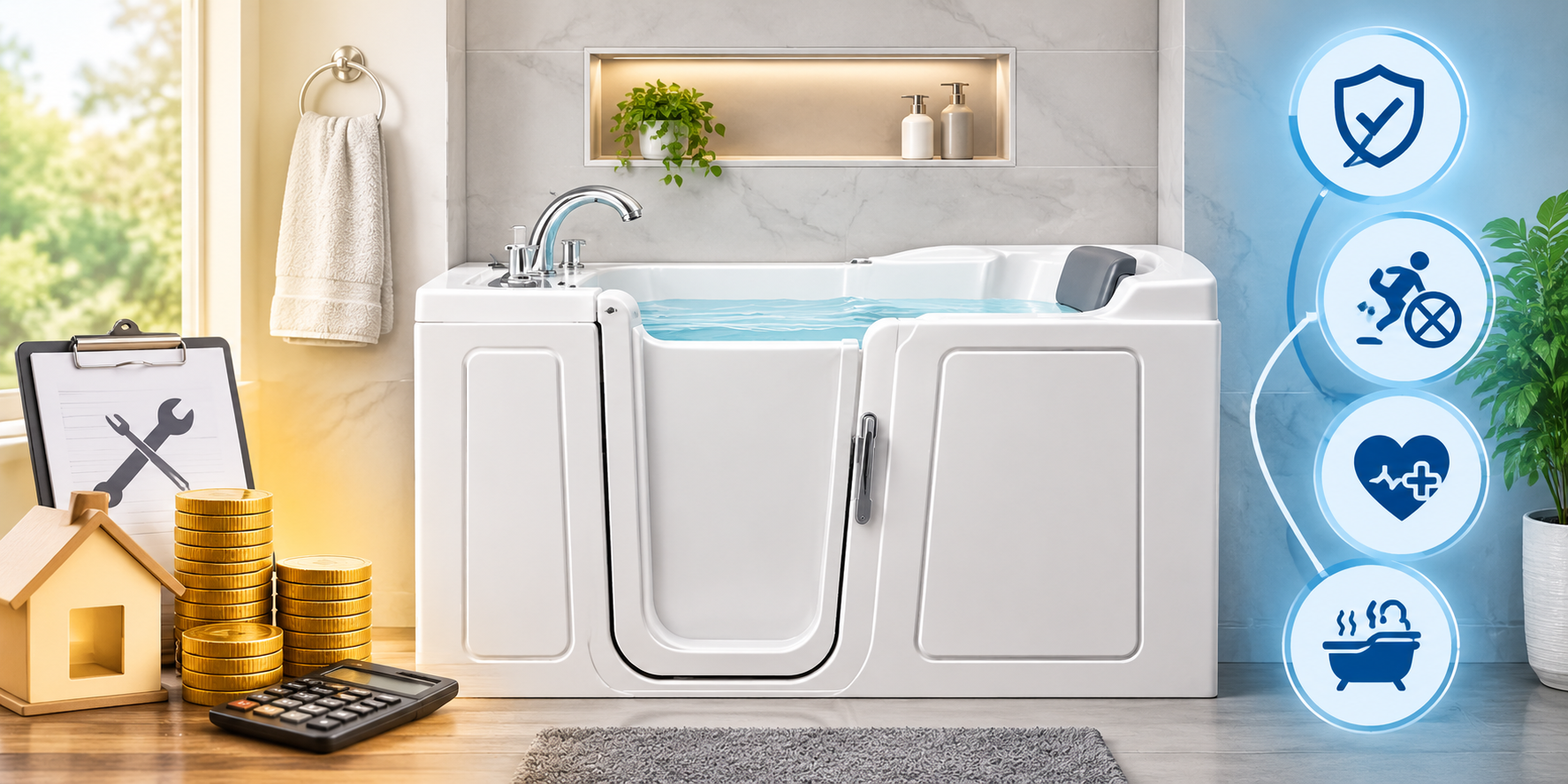
A walk-in tub can make a bathroom easier and safer to use, particularly for seniors and people who have difficulty stepping over the side of a traditional bathtub. But the upgrade can be expensive and the walk-in tub installation cost depends on much more than the tub itself.
In 2026, homeowners typically spend about $4,000 to $15,000 for a complete walk-in bathtub installation, with an average project cost around $8,000, according to current cost data. Site preparation, demolition, permits, plumbing, electrical work and accessibility upgrades can push the total higher.
So, is a walk-in tub worth it? For homeowners who prioritize safer bathing, easier access and aging in place, it can be. For others, a curbless shower or accessible shower may provide similar benefits at a lower cost.
Quick Answer
The average walk-in tub installation cost in 2026 is about $8,000, with many projects falling between $4,000 and $15,000. Basic tubs and straightforward replacements tend to cost less, while premium models with hydrotherapy, heated seats, fast-drain systems, bathroom modifications or new plumbing can cost substantially more.
A walk-in tub can be worth the investment if reducing the difficulty of getting into and out of a bathtub is a priority. Before buying, compare the total installed cost with an accessible shower and obtain quotes from qualified local bathroom remodeling professionals.
How Much Does a Walk-In Tub Cost in 2026?
The walk in tub cost varies significantly based on the model and the amount of bathroom work required.
|
Project |
Typical 2026 Cost Range |
|
Basic walk-in tub project |
$4,000–$7,000 |
|
Mid-range installation |
$7,000–$10,000 |
|
Premium walk-in tub |
$10,000–$15,000+ |
|
Major bathroom modifications |
$15,000+ |
These are planning ranges, not guaranteed quotes. Angi reports an average installed cost of approximately $8,000 and a typical overall range of $4,000 to $15,000. Permit fees, demolition, site preparation and disposal can add approximately $300 to $1,000.
Unlike flooring or countertops, walk-in tubs are difficult to price strictly by square foot. The major cost drivers are the tub, installation labor, plumbing and electrical requirements and modifications to the existing bathroom.
What Is Included in Walk-In Tub Installation?
A contractor may include several different services in a walk-in bathtub installation quote:
- Removal and disposal of the existing bathtub
- Delivery of the new tub
- Tub installation and leveling
- Plumbing connections
- Drain installation or modification
- Faucet installation
- Electrical connections for powered features
- Waterproofing and wall repairs
- New surround or bathroom panels
- Permit fees, where required
- Cleanup and disposal
Ask contractors to itemize each component. A quote that looks inexpensive initially may exclude demolition, electrical work, permits or finish repairs.
Factors That Affect Walk-In Tub Installation Cost
1. Type of Walk-In Tub
A simple soaking tub usually costs less than a model equipped with multiple therapeutic and convenience features.
Common options include:
- Soaking walk-in tubs
- Hydrotherapy tubs
- Air-jet tubs
- Wheelchair-accessible tubs
- Bariatric walk-in tubs
- Two-person models
- Combination hydrotherapy and air-therapy tubs
Choose features based on actual needs rather than assuming the most expensive model is the safest.
2. Bathroom Layout
Replacing an existing bathtub with a walk-in tub in the same location can reduce labor. Moving plumbing, changing the drain location, relocating electrical outlets or modifying walls and windows can increase costs.
A bathroom with easy access to existing water and drain lines is generally simpler than a layout requiring extensive alterations.
3. Plumbing and Electrical Work
Some walk-in tubs need dedicated electrical connections for pumps, heaters, lights or other powered features. Older bathrooms may also require electrical upgrades before new equipment can be installed.
A licensed professional should determine what the installation requires and whether local permits or inspections apply.
4. Demolition and Repairs
Removing the old tub can expose damaged drywall, flooring, subflooring or plumbing.
These repairs are easy to overlook when budgeting. Include a contingency for unexpected problems, particularly in older bathrooms.
5. Location
Labor rates vary across the United States. Projects in high-cost metropolitan areas may cost more than similar installations in lower-cost markets.
Regional differences can also affect permit fees, contractor availability, material prices and travel charges.
Walk-In Tub Features Worth Considering
The right walk in tub for seniors should focus on accessibility and practical safety.
Low-entry door: The main benefit is easier entry compared with stepping over the high wall of a conventional bathtub.
Built-in seat: A properly positioned seat allows the user to bathe while sitting rather than lowering themselves into a traditional tub.
Grab bars: Integrated or properly installed grab bars can provide additional support. Placement should match the user's mobility needs.
Handheld shower: A handheld showerhead can make bathing easier while seated.
Non-slip surfaces: Look for a tub designed to reduce slipping when entering, exiting or bathing.
Fast-drain system: One potential drawback of walk-in tubs is that users generally need to remain seated while the tub drains and fills. A faster drain can reduce waiting time, although it may increase the purchase price.
Hydrotherapy: Jets may provide a more spa-like experience, but they add cost and aren't necessary for everyone.
Pros and Cons of Walk-In Tubs
|
Pros |
Cons |
|
Easier entry and exit |
Higher upfront cost |
|
Useful for aging in place |
Installation can be disruptive |
|
Built-in seating |
User must wait for the tub to drain |
|
Accessibility-focused features |
May require plumbing or electrical work |
|
Can improve bathing independence |
Not ideal for every bathroom layout |
|
Multiple safety features available |
Some premium features add substantial cost |
Is a Walk-In Tub Worth It?
For many homeowners, the answer is yes, if accessibility is the primary goal.
A walk-in tub can be worthwhile when a traditional tub has become difficult or unsafe to use. It may also make sense as part of a broader aging-in-place renovation.
However, the investment is harder to justify if the homeowner rarely takes baths, expects to move soon or primarily wants a low-maintenance bathroom. In those situations, an accessible shower may be a better fit.
Consider these questions before buying:
- Is stepping over the existing tub difficult?
- Does the user need a seated bathing position?
- Will the bathroom layout accommodate the tub comfortably?
- Is there enough space for safe entry and exit?
- Will plumbing or electrical systems need modification?
- Would an accessible shower meet the same needs?
- How long do you expect to remain in the home?
Walk-In Tub vs. Accessible Shower
A walk-in tub isn't the only accessibility option.
|
Feature |
Walk-In Tub |
Accessible Shower |
|
Low-threshold entry |
Yes |
Yes |
|
Seated bathing |
Built-in seat |
Add shower bench |
|
Soaking bath |
Yes |
No |
|
Easy cleaning |
Moderate |
Usually easier |
|
Filling/draining wait |
Yes |
No |
|
Custom accessibility |
Moderate–high |
High |
|
Typical project complexity |
Moderate–high |
Varies |
For homeowners who prefer showers and want quick entry and exit, a curbless or low-threshold shower may be more practical.
How to Save Money on Walk-In Tub Installation
You don't necessarily need the most expensive tub to create a safer bathroom.
1. Keep the existing layout.
Installing the tub where the existing bathtub sits may reduce plumbing and demolition work.
2. Prioritize essential features.
Consider spending on accessibility features before luxury options.
3. Compare several contractors.
Get at least two or three detailed estimates with the same project specifications.
4. Ask about the complete project price.
Confirm whether demolition, disposal, permits, plumbing, electrical work, waterproofing and repairs are included.
5. Consider the entire bathroom.
If the bathroom also needs grab bars, improved lighting, flooring or doorway modifications, combining related work may be more efficient than completing separate projects.
Common Walk-In Tub Installation Mistakes
Choosing based only on the tub price: A low-priced tub can become an expensive project if extensive installation work is required.
Ignoring bathroom access: Measure doorways, hallways and the bathroom before ordering. The tub must be able to reach the installation area.
Buying unnecessary features: Hydrotherapy, heated seats, chromotherapy and other upgrades can increase the purchase price. Choose features that provide genuine value to the user.
Accepting a vague quote: A professional estimate should clearly explain labor, materials, demolition, permits, electrical work, plumbing and cleanup.
Skipping local permit requirements: Permit rules differ by jurisdiction. Ask your contractor or local building department what approvals are required before work begins.
Does Medicare Pay for a Walk-In Tub?
Homeowners should be cautious about claims that Medicare will automatically pay for a walk-in tub.
Medicare Part B covers certain medically necessary durable medical equipment, but eligibility depends on Medicare's coverage requirements. Medicare's home-health coverage also covers specific health services and equipment under qualifying circumstances, rather than automatically covering general bathroom remodeling.
If you're considering a walk-in tub because of a medical or mobility issue, check your specific insurance, Medicaid, veterans' benefits, state programs or other assistance options before assuming you'll receive reimbursement.
Tax rules and proposed accessibility incentives can also change, so verify current requirements with the Internal Revenue Service or a qualified tax professional before claiming a deduction or credit.
Conclusion: Should You Install a Walk-In Tub?
The walk-in tub installation cost in 2026 averages around $8,000, with many complete projects ranging from $4,000 to $15,000.
The right choice depends on your bathroom, budget, mobility needs and plans for the home. For seniors who want easier bathtub access and greater independence, a walk-in tub can be a worthwhile investment. For homeowners who primarily want a low-threshold bathing solution, an accessible shower may offer better value.
Before committing, compare the complete installed price, not just the tub's advertised cost.
Ready to compare your options? Get quotes from local bathroom remodeling professionals through BestQuoteZone and compare project costs, and installation services recommendations before making your decision.

.png)
.png)