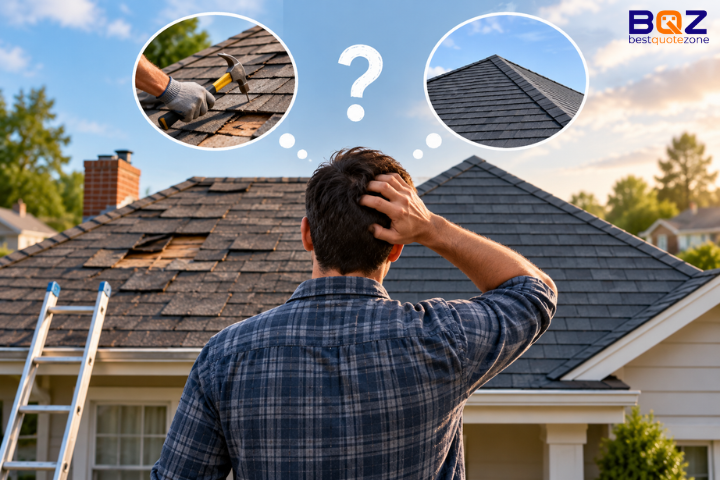
A leaking roof does not automatically mean you need a new roof. In many cases, a localized problem such as damaged shingles, flashing or a small section of underlayment can be repaired. But when damage is widespread or the roof is nearing the end of its useful life, replacement may make more financial sense.
Knowing the difference can help you avoid unnecessary costs while preventing a small roofing problem from becoming major structural damage.
Quick Answer
Repair your roof when the damage is limited, the underlying roof system is still in good condition and the roof has substantial service life remaining.
Replace your roof when damage is widespread, the roof is approaching the end of its expected life, there are repeated leaks or the underlying decking and roof system have significant problems.
The National Roofing Contractors Association (NRCA) notes that a roof evaluation should consider the condition of the roof covering, flashing, drainage, ventilation and other components, not just visible shingles.
Roof Repair vs. Roof Replacement
|
Factor |
Roof Repair |
Roof Replacement |
|
Damage |
Localized |
Widespread |
|
Roof age |
Relatively young |
Near or beyond expected service life |
|
Leaks |
One or limited areas |
Multiple or recurring |
|
Shingles |
Small number damaged |
Extensive deterioration |
|
Cost |
Lower upfront cost |
Higher upfront investment |
|
Best for |
Isolated problems |
Aging or extensively damaged roofs |
|
Long-term solution |
Sometimes |
Usually |
When Roof Repair Makes Sense
Roof repair may be appropriate when the problem is confined to a specific area.
Common repair situations include:
- A few missing or damaged shingles
- Damaged flashing around a chimney or vent
- A small area of storm damage
- A localized leak
- Loose roofing materials
- Minor gutter or drainage-related problems
- Limited damage to underlayment or decking
NRCA specifically notes that a roof leak does not automatically require complete replacement. A leak can originate from loose flashing or damage to a particular section of the roof.
The key is determining whether the repair addresses the actual source of the problem rather than temporarily covering up its symptoms.
When Roof Replacement Makes Sense
Replacement becomes more appropriate when the roof has widespread deterioration or its remaining service life is limited.
Signs can include:
- Frequent or recurring leaks
- Large areas of missing or damaged shingles
- Shingles that are cracked, curled or deteriorated
- Significant granule loss
- Sagging areas
- Extensive water damage
- Deteriorated flashing throughout the roof
- Repeated repairs over several years
- An aging roof with increasingly frequent problems
NRCA states that most new roofs are designed to provide useful service for about 20 years, although actual service life varies based on material, climate, design, installation quality and maintenance. Some materials, including slate, clay tile and certain metal systems, can last considerably longer. That means roof age alone should not determine your decision. Condition matters just as much.
How Roof Age Affects the Decision
One of the biggest questions homeowners ask is, “When should I replace my roof?”
There is no universal replacement date for every roof. Asphalt shingles, metal, tile, slate and other materials have different expected service lives.
A newer roof with isolated damage may be a strong candidate for repair. An older roof with widespread deterioration may be a better candidate for replacement.
For example, spending money on repeated repairs may make less sense when an older roof is already approaching the end of its useful life. NRCA guidance emphasizes considering remaining service life alongside the economics and condition of the existing roof.
Signs You May Need a Roof Repair
Look for these warning signs from the ground or from inside your home:
1. Missing or Damaged Shingles
A few missing or damaged shingles after wind or weather exposure may be repairable.
2. A Localized Leak
Water stains on a ceiling can indicate a roof problem, although the visible stain may not be directly below the source of the leak.
3. Damaged Flashing
Flashing around chimneys, vents, skylights and roof intersections can deteriorate and allow water to enter.
4. Limited Storm Damage
Hail, wind and falling branches can damage individual areas without necessarily requiring a complete roof replacement.
After severe weather, NRCA recommends having damage assessed by a professional rather than attempting repairs yourself.
Signs You May Need a Roof Replacement
Replacement deserves serious consideration when problems are widespread.
Recurring Leaks
If repairs repeatedly solve one leak only for another to appear, the roof may have broader deterioration.
Widespread Shingle Damage
Extensive curling, cracking, missing shingles or deterioration can indicate that the roof is reaching the end of its useful life.
Sagging
A visibly sagging roof can indicate problems involving the roof structure or decking and should receive prompt professional attention.
Extensive Water Damage
Water intrusion that has affected multiple areas of the roof assembly may require more than a surface-level repair.
An Aging Roof
An older roof with multiple problems may not be a good candidate for continued patching.
What Does Roof Repair Cost?
Roof repair prices vary considerably by location, roof type, accessibility, materials and the extent of damage. Small repairs can cost substantially less than a complete replacement, but homeowners should avoid choosing an option based solely on the initial price.
|
Project |
Typical Cost Consideration |
|
Minor shingle repair |
Usually lower-cost |
|
Flashing repair |
Moderate depending on location |
|
Localized leak repair |
Varies by cause and accessibility |
|
Extensive repairs |
Can become expensive |
|
Complete replacement |
Major investment based on roof size and materials |
Because roofing prices vary across the United States, homeowners should obtain local estimates rather than relying on a single national average.
A contractor should provide a written scope explaining what will be repaired or replaced, what materials will be used and whether additional damage could change the final price.
Should You Repair or Replace After Storm Damage?
Storm damage should be evaluated carefully. Wind, hail, falling branches, hurricanes, tornadoes and severe weather can damage different parts of a roof. Not every damaged roof requires replacement.
A professional inspection should determine:
- Where the damage occurred.
- Whether the damage is localized or widespread.
- Whether the roof deck or other components were affected.
- Whether repairs can restore the roof properly.
- Whether replacement is more practical given the roof's age and condition.
Do not climb onto the roof yourself to investigate damage. NRCA recommends ground-level inspection by homeowners and professional assessment for closer evaluation and repairs.
How to Find a Reliable “Roof Repair Near Me”
If you search for roof repair near me, do more than choose the first contractor you find.
Before hiring a roofing company, consider:
- Proof of appropriate insurance
- Required state or local licensing
- A permanent business location
- References or examples of previous work
- A detailed written estimate
- Clear warranty information
- Specific materials listed in the proposal
- Start and estimated completion dates
- A clearly defined scope of work
NRCA recommends researching contractors, checking insurance and licensing where required, reviewing references and getting a detailed written proposal. It also cautions homeowners against choosing a contractor solely because they submitted the lowest bid.
Common Mistakes Homeowners Make
Choosing the Cheapest Quote
A low bid may leave out important work, materials or necessary repairs.
Assuming Every Leak Requires Replacement
A localized problem may be repairable.
Ignoring Small Problems
A minor leak or damaged flashing can become more serious if left unresolved.
Getting Only One Estimate
Comparing multiple written proposals can help you understand whether contractors are recommending similar solutions.
Trying to Repair the Roof Yourself
Roof work involves fall hazards and requires specialized knowledge. NRCA advises against homeowners attempting roof repairs unless they have the necessary experience and equipment.
How to Compare Roofing Estimates
When comparing estimates, look beyond the total price.
Ask each contractor:
- Is this a repair or replacement recommendation?
- What caused the damage?
- What areas will be repaired or replaced?
- Will damaged decking be included if discovered?
- What roofing materials will be used?
- Will flashing be repaired or replaced?
- What warranties are included?
- Who handles permits if required?
- How will unexpected damage be handled?
- What is the expected project timeline?
A detailed proposal makes it easier to compare contractors on an equal basis.
Conclusion: Repair or Replace?
The right choice between roof repair and replacement depends on how extensive the damage is, how old the roof is and how much useful life remains. A localized leak or small area of damage may only require a professional repair. But repeated leaks, widespread deterioration, structural problems or an aging roof can make replacement the better long-term investment.
If you're unsure, don't guess based on one visible problem. Have the roof professionally evaluated and compare detailed recommendations from qualified local contractors.
Ready to find out what your roof actually needs? Compare quotes from local roofing professionals through BestQuoteZone to evaluate your repair or replacement options and make a more informed decision.
.png)
.png)

.webp)