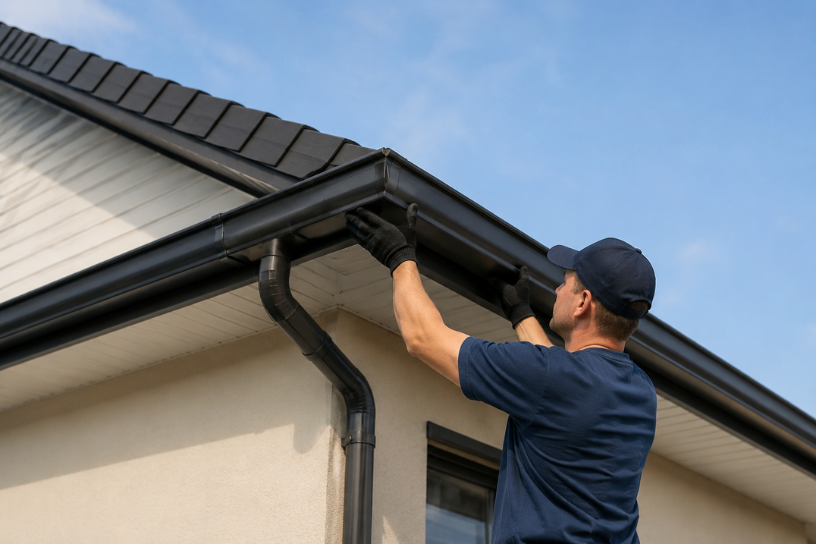
Installing new gutters is one of the most effective ways to protect your home's roof, foundation, siding, and landscaping from water damage. But before hiring a contractor, most homeowners want to know one thing: How much does gutter installation cost in 2026?
The answer depends on several factors, including your home's size, the gutter material you choose, labor rates in your area, and whether you add gutter guards or custom downspouts. While low-cost vinyl systems may fit smaller budgets, premium materials like copper can significantly increase the total investment.
This guide breaks down the average gutter installation cost, explains the cost per linear foot gutters, compares materials, and shows regional pricing across the United States. By the end, you'll have a realistic idea of what your project may cost and how to budget for it.
Quick Answer
In 2026, the average gutter installation cost ranges from $1,200 to $3,800 for most U.S. homes, with a national average of approximately $2,300. Homeowners typically pay between $7 and $28 per linear foot, depending on the material, labor costs, and project complexity. Adding gutter guards usually increases the total by $4 to $15 per linear foot.
Average Gutter Installation Cost in 2026
Most homeowners spend somewhere between $1,200 and $3,800 on a complete gutter installation project. However, smaller homes with basic vinyl gutters may cost less than $1,000, while large custom homes with premium materials can exceed $8,000.
Several variables influence pricing, including:
- Total gutter length
- Number of stories
- Roof design
- Material selection
- Downspout quantity
- Fascia condition
- Local labor rates
- Permit requirements (where applicable)
Although materials receive much of the attention, labor often represents a significant share of the total project cost. Complex rooflines or multi-story homes generally require additional safety equipment and installation time, increasing labor expenses.
National Gutter Installation Cost Breakdown
|
Cost Category |
Average Cost |
|
National Average |
$2,300 |
|
Typical Range |
$1,200–$3,800 |
|
Low-End Installation |
$700–$1,000 |
|
High-End Installation |
$6,000–$8,500+ |
|
Average Home Size |
150–250 linear feet |
|
Average Project Duration |
1–2 days |
These estimates reflect professionally installed gutters for a typical single-family home. Projects involving custom fabrication, steep roofs, or premium finishes may fall toward the upper end of the range.
Cost Per Linear Foot Gutters
Contractors usually estimate projects using linear feet, making this one of the most important pricing metrics homeowners should understand.
Average Cost Per Linear Foot Gutters
|
Material |
Installed Cost Per Linear Foot |
|
Vinyl |
$7–$12 |
|
Aluminum |
$9–$16 |
|
Galvanized Steel |
$11–$20 |
|
Zinc |
$18–$32 |
|
Copper |
$28–$45 |
For example:
- 160 linear feet of aluminum gutters at $12 per foot would cost about $1,920.
- The same home with copper gutters at $35 per foot would cost approximately $5,600 before optional upgrades.
Homes with complex rooflines typically require more corners, end caps, miters and downspouts, increasing the overall cost beyond a simple linear-foot calculation.
Gutter Material Cost Comparison
Choosing the right gutter material affects not only the installation cost but also long-term maintenance, durability, and curb appeal.
|
Material |
Lifespan |
Maintenance |
Best For |
|
Vinyl |
10–20 years |
Low |
Budget-conscious homeowners |
|
Aluminum |
20–30 years |
Low |
Most U.S. homes |
|
Steel |
20–25 years |
Moderate |
Areas with heavy snow |
|
Zinc |
40–60 years |
Low |
Premium installations |
|
Copper |
50+ years |
Very Low |
Historic and luxury homes |
Vinyl Gutters
Vinyl gutters are the least expensive option and are lightweight enough for relatively quick installation. They resist rust but may become brittle after years of exposure to intense sunlight or freezing temperatures.
Best suited for:
- Mild climates
- Smaller homes
- Lower upfront budgets
Average installed cost:
$7–$12 per linear foot
Aluminum Gutters
Aluminum continues to be the most popular choice because it offers an excellent balance between affordability, durability, and corrosion resistance.
Benefits include:
- Rust-resistant
- Available in many colors
- Lightweight
- Compatible with seamless designs
- Minimal maintenance
Average installed cost:
$9–$16 per linear foot
Steel Gutters
Steel gutters are stronger than aluminum and perform well in regions with heavy snowfall or falling branches. However, they require protective coatings to prevent corrosion over time.
Average installed cost:
$11–$20 per linear foot
Zinc Gutters
Zinc develops a natural protective patina that helps prevent corrosion and extends its lifespan. Although the initial investment is higher, zinc often requires less maintenance than many other materials.
Average installed cost:
$18–$32 per linear foot
Copper Gutters
Copper gutters are considered a premium upgrade. Over time, they develop a distinctive green patina that many homeowners find attractive, particularly on historic or high-end properties.
While expensive, they can last for decades with minimal maintenance when professionally installed.
Average installed cost:
$28–$45 per linear foot
Seamless vs. Sectional Gutters
Another major pricing factor is whether you choose seamless or sectional gutters.
|
Feature |
Seamless |
Sectional |
|
Average Cost |
Higher |
Lower |
|
Leak Risk |
Low |
Moderate |
|
Maintenance |
Lower |
Higher |
|
Appearance |
Cleaner |
Visible joints |
|
Custom Fit |
Yes |
No |
Seamless gutters are manufactured on-site to match your home's dimensions, reducing the number of joints where leaks commonly develop. Although they cost more upfront, many homeowners find the added durability and reduced maintenance worthwhile.
Labor Costs for Gutter Installation
Labor typically represents 35% to 50% of the total gutter installation cost.
Professional installation generally costs between $3 and $10 per linear foot, depending on factors such as:
- Home height
- Roof pitch
- Accessibility
- Removal of old gutters
- Number of downspouts
- Custom corners
- Local labor market
A straightforward one-story home can often be completed in a single day, while larger or more complex homes may require additional labor and specialized safety equipment.
Regional Gutter Installation Costs Across the U.S.
Labor rates, climate, local building codes, and material availability all influence the gutter installation cost. While the national average provides a useful benchmark, homeowners in different parts of the country can expect noticeable price differences.
|
U.S. Region |
Typical Installed Cost |
|
Northeast |
$1,700–$4,200 |
|
Midwest |
$1,300–$3,500 |
|
South |
$1,200–$3,300 |
|
Southwest |
$1,300–$3,600 |
|
West Coast |
$1,800–$4,800 |
Northeast
States such as New York, Massachusetts, and Pennsylvania often have higher labor costs. Homes also need gutter systems capable of handling snow, ice, and heavy seasonal rainfall, which can increase installation expenses.
Midwest
Snow and ice are common concerns throughout the Midwest. Many homeowners invest in stronger aluminum or galvanized steel gutters that can better withstand winter weather.
South
The South generally benefits from lower labor costs, but frequent thunderstorms and hurricanes make efficient water management especially important. Larger downspouts and seamless gutters are common upgrades.
Southwest
Although rainfall is less frequent in many Southwestern states, sudden storms can produce significant runoff. Proper sizing and durable materials remain important for long-term performance.
West Coast
California, Washington, and Oregon often see higher contractor rates. Coastal areas may benefit from corrosion-resistant materials like aluminum or copper due to increased moisture and salt exposure.
What Affects Gutter Installation Cost?
No two homes require exactly the same gutter system. Contractors consider several variables before preparing an estimate.
1. Home Size
Larger homes require more gutter sections, downspouts, and installation time.
For example:
- Small home: 120–150 linear feet
- Medium home: 170–220 linear feet
- Large home: 250–350+ linear feet
More linear footage directly increases material and labor costs.
2. Number of Stories
Installing gutters on a two- or three-story home is more labor-intensive than working on a single-story property.
Higher homes often require:
- Additional safety equipment
- Scaffolding or lifts
- Longer installation times
- Larger crews
As a result, labor costs can increase by 20–40%.
3. Roof Complexity
Simple rooflines with long, straight sections are easier to work on than homes featuring:
- Multiple gables
- Dormers
- Valleys
- Turrets
- Complex architectural details
Every corner requires additional fittings, which increases both material costs and installation time.
4. Material Selection
Material choice is one of the biggest pricing factors.
Approximate installed costs include:
|
Material |
Cost Per Linear Foot |
|
Vinyl |
$7–$12 |
|
Aluminum |
$9–$16 |
|
Steel |
$11–$20 |
|
Zinc |
$18–$32 |
|
Copper |
$28–$45 |
Although premium materials cost more upfront, they often provide longer service lives and reduced maintenance.
5. Old Gutter Removal
Replacing an existing system adds labor.
Typical removal costs range from:
$100–$600
The final price depends on:
- Existing material
- Home size
- Disposal fees
- Accessibility
6. Fascia Repairs
Sometimes installers discover rotted fascia boards after removing old gutters.
Minor repairs may cost a few hundred dollars, while extensive wood replacement can significantly increase the project budget. Addressing these issues during installation helps prevent future structural damage.
Gutter Guard Installation Cost
Many homeowners choose to install gutter guards at the same time as new gutters to reduce maintenance and improve water flow.
The average gutter guard installation cost ranges from $4 to $15 per linear foot, depending on the product and installation method.
|
Gutter Guard Type |
Installed Cost Per Linear Foot |
|
Screen Guards |
$4–$8 |
|
Mesh Guards |
$6–$12 |
|
Micro-Mesh |
$9–$15 |
|
Surface Tension Systems |
$12–$20 |
Benefits of Gutter Guards
- Reduce leaf buildup
- Minimize clogging
- Lower cleaning frequency
- Improve water drainage
- Extend gutter lifespan
While gutter guards don't eliminate maintenance entirely, they can substantially reduce debris accumulation and make seasonal inspections easier.
Additional Costs to Consider
Some projects include upgrades beyond standard gutter installation.
|
Upgrade |
Typical Cost |
|
Extra Downspouts |
$100–$300 each |
|
Splash Blocks |
$15–$40 each |
|
Underground Drain Extensions |
$500–$2,000 |
|
Rain Barrels |
$100–$500 |
|
Heat Cables |
$300–$1,200 |
Discuss these options with your contractor if your property experiences drainage issues, erosion, or ice dams.
Ways to Save Money on Gutter Installation
Saving money doesn't necessarily mean choosing the cheapest materials. Smart planning can help you maximize value without sacrificing quality.
Consider these strategies:
- Compare multiple contractor quotes.
- Install gutters during slower seasons when schedules are more flexible.
- Bundle gutter installation with roof replacement if both projects are planned.
- Choose durable materials that balance longevity and affordability.
- Install gutter guards during the initial project rather than as a separate service.
- Keep your existing downspouts if they're still in good condition.
Comparing estimates from several licensed contractors is one of the most effective ways to ensure competitive pricing and appropriate system recommendations.
Return on Investment (ROI)
A professionally installed gutter system can help protect some of your home's most valuable components, including:
- Foundation
- Basement
- Roof
- Fascia
- Soffits
- Siding
- Landscaping
By directing rainwater safely away from the structure, gutters can reduce the likelihood of costly repairs caused by moisture intrusion and soil erosion.
Although gutters are not typically considered a high-return remodeling project on their own, they play a vital role in preserving your home's overall condition and value.
Buying Guide: Choosing the Right Gutters
Before making a decision, evaluate these key factors.
Best for Budget
- Vinyl gutters
Best Overall Value
- Aluminum seamless gutters
Best for Snowy Climates
- Galvanized steel
Best for Coastal Areas
- Aluminum or copper
Best for Luxury Homes
- Copper or zinc
Also ask prospective contractors about:
- Warranty coverage
- Material thickness
- Fastener systems
- Downspout sizing
- Installation timeline
- Cleanup procedures
- Local permit requirements, if applicable
Expert Tips
- Choose seamless gutters whenever possible to reduce the number of joints where leaks can develop.
- Ensure downspouts discharge water several feet away from the foundation.
- Clean gutters at least twice a year, even if gutter guards are installed.
- Select materials appropriate for your local climate.
- Verify that the contractor is licensed and insured before work begins.
Common Mistakes to Avoid
Many homeowners unintentionally shorten the lifespan of their gutter system by making avoidable decisions.
Common mistakes include:
- Choosing the cheapest material without considering durability.
- Hiring unlicensed installers.
- Ignoring damaged fascia boards.
- Installing too few downspouts.
- Skipping routine maintenance.
- Assuming gutter guards eliminate all cleaning.
Taking the time to plan the project carefully can help reduce future repair costs and improve long-term performance.
Conclusion
Understanding the gutter installation cost helps you make informed decisions before starting your project. While most homeowners spend between $1,200 and $3,800, the final price depends on factors such as material choice, home size, roof complexity, labor rates, and optional upgrades like gutter guards.
Comparing estimates from qualified local contractors is one of the best ways to find the right balance between price, quality, and long-term value. If you're planning a new gutter system, reviewing your options and obtaining multiple quotes can help ensure your investment fits both your budget and your home's needs.
For more information about professional gutter services, explore BestQuoteZone's Gutter Installation guide to better understand installation options and what to expect during the process.
For additional guidance on selecting and maintaining residential gutter systems, the National Association of Home Builders (NAHB) provides homeowner resources and industry best practices.
Frequently Asked Questions
1. How much does gutter installation cost for a 2,000-square-foot house?
A typical 2,000-square-foot home generally requires 180–220 linear feet of gutters. Depending on the material and labor rates, professional installation usually costs between $1,600 and $3,500.
2. What is the average cost per linear foot gutter?
Most homeowners pay $7–$28 per linear foot installed. Vinyl sits at the lower end of the range, while premium copper systems cost significantly more.
3. Is seamless gutter installation worth the extra cost?
For many homeowners, yes. Seamless gutters have fewer joints, reducing the likelihood of leaks and lowering maintenance needs. Although they cost more upfront, they often provide better long-term value.
4. How much does gutter guard installation cost?
The average gutter guard installation cost ranges from $4 to $15 per linear foot, depending on the type of guard selected and the complexity of the installation.
5. Which gutter material lasts the longest?
Copper and zinc gutters generally offer the longest lifespan, often lasting 50 years or more with proper maintenance. Aluminum also provides excellent durability for most residential applications.
6. How long does gutter installation take?
Most standard residential installations are completed within one day. Larger homes or projects with complex rooflines may require two days or longer.
7. Can I install gutters myself?
DIY installation is possible for experienced homeowners, but professional installation typically ensures proper slope, secure fastening, and compliance with manufacturer warranty requirements.
8. Do new gutters increase home value?
While gutters may not dramatically increase resale value on their own, they help protect the home's structure from water damage, supporting long-term property value and reducing future repair expenses.


.png)
.png)