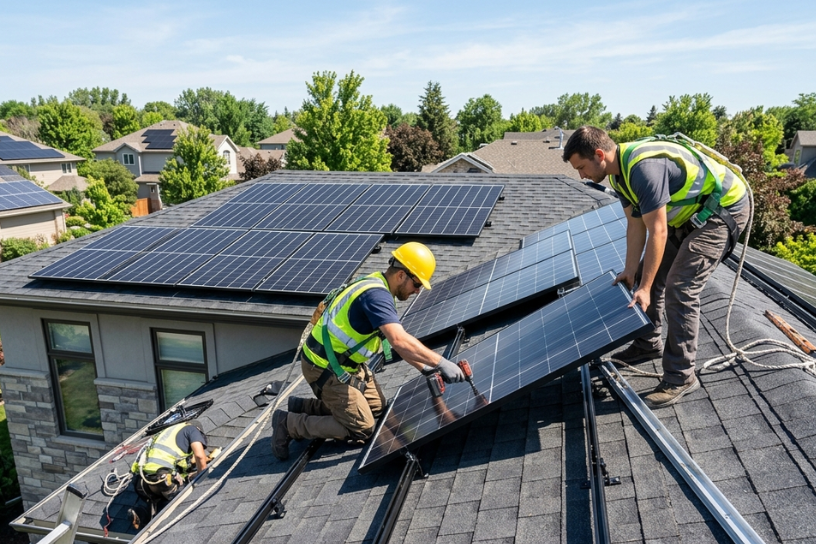
The average solar panel installation cost in 2026 ranges from $15,000 to $30,000 for a typical residential system before incentives. Most homeowners pay $2.50–$3.50 per watt, depending on system size, panel type, labor costs, and location. With the Federal Solar Investment Tax Credit (ITC), eligible homeowners can significantly reduce their upfront costs, making solar more affordable than ever.
Solar Panel Installation Cost in 2026
Installing solar panels is one of the most effective ways to reduce electricity bills and increase your home's energy independence. While the upfront investment can seem significant, declining equipment prices, improved panel efficiency, and federal incentives continue to make solar an attractive long-term investment for U.S. homeowners.
In 2026, the average solar panel installation cost depends on several factors, including:
- System size
- Roof complexity
- Panel efficiency
- Local labor rates
- Permit requirements
- Battery storage
- Geographic location
Most residential systems fall between 5 kW and 10 kW, providing enough electricity for an average American household.
Average Solar Panel Installation Cost by System Size
System size is the biggest factor influencing installation costs.
|
System Size |
Average Cost Before Tax Credit |
Suitable For |
|
3 kW |
$7,500–$10,500 |
Small homes |
|
4 kW |
$10,000–$14,000 |
Apartments & condos |
|
5 kW |
$12,500–$17,500 |
Small families |
|
6 kW |
$15,000–$21,000 |
Average U.S. home |
|
8 kW |
$20,000–$28,000 |
Larger households |
|
10 kW |
$25,000–$35,000 |
High energy usage |
Buying the largest system isn't always the smartest choice. A professional installer can size your system based on your annual electricity consumption, roof space, and local utility policies.
If you're estimating costs based on your home's size, our guide on how much solar panels cost for a 2,000 sq. ft. house provides a detailed breakdown of system sizing, expected energy production, and installation costs for an average U.S. home.
Average Cost of Solar Per Watt
One of the easiest ways to compare solar quotes is by looking at the cost of solar per watt.
Average Price Per Watt (2026)
|
Installation Type |
Average Cost Per Watt |
|
Budget System |
$2.50 |
|
Standard Installation |
$2.75–$3.10 |
|
Premium Equipment |
$3.20–$3.50+ |
Example Calculation
A 6,000-watt (6 kW) solar system priced at $3.00 per watt would cost:
6,000 × $3.00 = $18,000
before tax credits or rebates.
Comparing installers by price per watt provides a more accurate comparison than simply looking at the total project price.
What Factors Affect Solar Panel Installation Cost?
Every home is unique, and so is every solar installation. Several variables influence the final project cost.
1. System Size
Larger systems generate more electricity but require additional panels, mounting hardware, wiring, and labor.
Higher capacity generally lowers the cost per watt due to economies of scale.
2. Solar Panel Type
Different panel technologies come with different price points.
|
Panel Type |
Cost |
Efficiency |
|
Monocrystalline |
Higher |
Excellent |
|
Polycrystalline |
Moderate |
Good |
|
Thin-Film |
Lower |
Lower |
Monocrystalline panels remain the most popular choice because they offer higher efficiency and require less roof space.
3. Roof Design
Installation becomes more expensive when roofs have:
- Steep slopes
- Multiple levels
- Skylights
- Dormers
- Chimneys
- Limited working space
Complex roofs require additional labor and safety equipment.
4. Roof Condition
If your roof is nearing the end of its lifespan, replacing it before installing solar panels may be more cost-effective than removing and reinstalling panels later.
Because solar panels typically last 25 to 30 years, it's often more cost-effective to replace an aging roof before installation rather than paying to remove and reinstall the system later. If your roof is nearing the end of its lifespan, working with experienced roof replacement contractors before installing solar panels can help prevent additional labor costs in the future.
5. Battery Storage
Adding a home battery significantly increases project costs but provides backup power during outages and allows homeowners to store excess solar energy for later use.
Battery systems can add several thousand dollars to the total installation cost depending on capacity and brand.
6. Local Labor Rates
Labor costs vary considerably across the United States.
Homeowners in states with higher wages and stricter permitting requirements often pay more than those in regions with lower labor costs.
7. Permits and Inspections
Solar projects generally require:
- Electrical permits
- Building permits
- Utility interconnection approval
- Final inspections
Permit fees vary by municipality and are usually included in installer quotes.
Solar Equipment Cost Breakdown
The total installation cost includes far more than just solar panels.
|
Component |
Typical Share of Total Cost |
|
Solar Panels |
30–40% |
|
Inverter |
10–15% |
|
Mounting Hardware |
10% |
|
Electrical Equipment |
10% |
|
Labor |
20–30% |
|
Permits & Inspection |
5% |
|
Sales, Design & Overhead |
Remaining balance |
Understanding these cost components helps homeowners compare estimates more effectively and identify unusually high or low quotes.
Labor Costs for Solar Installation
Professional installation typically accounts for 20%–30% of the total project cost.
Labor includes:
- Site assessment
- System design
- Roof preparation
- Mount installation
- Panel installation
- Electrical wiring
- Inverter installation
- Testing
- Utility connection
- Final inspection
Hiring an experienced installer helps ensure the system is installed safely, complies with local building codes and performs efficiently over its lifespan.
Why Comparing Quotes Matters?
Solar installation costs can vary by several thousand dollars for similar-sized systems. Differences may reflect equipment quality, warranty coverage, financing options or installer experience.
Instead of choosing the lowest price alone, compare:
- Cost per watt
- Equipment brands
- Panel efficiency
- Workmanship warranty
- Manufacturer warranty
- Estimated energy production
- Installation timeline
- Customer reviews
Getting multiple estimates gives you a clearer picture of market pricing and helps you identify the best overall value.
Solar Tax Credit 2026
One of the biggest advantages of going solar is the Federal Solar Investment Tax Credit (ITC). This incentive allows eligible homeowners to reduce the overall cost of installing a solar energy system by claiming a percentage of qualified expenses on their federal taxes.
The credit applies to:
- Solar panels
- Inverters
- Mounting equipment
- Wiring
- Balance of system components
- Labor and installation costs
- Energy storage systems that meet eligibility requirements
Example: If your solar installation costs $20,000 and you qualify for the federal tax credit, your effective out-of-pocket cost could be significantly lower after claiming the credit.
Because tax laws and incentive programs can change, homeowners should verify current eligibility requirements before beginning a project.
State Solar Incentives
In addition to the federal tax credit, many states, utilities, and local governments offer incentives that can further reduce installation costs.
Common programs include:
- State tax credits
- Cash rebates
- Property tax exemptions
- Sales tax exemptions
- Performance-based incentives
- Net metering programs
Some of the strongest solar incentive programs are available in states such as:
- California
- New York
- New Jersey
- Massachusetts
- Illinois
- Colorado
- Maryland
Incentives vary by location and utility provider, so homeowners should ask installers about programs available in their area.
Solar Panel Installation Cost by State
Labor rates, permitting fees, electricity prices, and state incentives all affect installation costs.
|
State |
Average Cost Before Incentives |
|
California |
$17,000–$28,000 |
|
Texas |
$15,000–$27,000 |
|
Florida |
$14,000–$25,000 |
|
Arizona |
$14,000–$24,000 |
|
New York |
$18,000–$30,000 |
|
New Jersey |
$17,000–$29,000 |
|
Colorado |
$16,000–$28,000 |
|
North Carolina |
$15,000–$26,000 |
Higher electricity rates often improve the financial return on solar, even if installation costs are slightly higher.
Is Solar Worth the Investment?
For many homeowners, the answer is yes.
Solar panels can provide long-term savings by reducing or offsetting monthly electricity bills while increasing property value.
Potential benefits include:
- Lower utility bills
- Protection against rising electricity rates
- Reduced carbon emissions
- Increased home resale value
- Energy independence
- Eligibility for tax incentives
The exact return on investment depends on:
- Local electricity prices
- System size
- Roof orientation
- Sunlight exposure
- Financing method
- Available incentives
Many residential systems pay for themselves over time through utility savings.
Ways to Save Money on Solar Installation
Installing solar is a major investment, but there are several ways to reduce costs without sacrificing quality.
Compare Multiple Quotes
Always request estimates from at least three reputable installers. Pricing, equipment, warranties, and financing options can vary significantly.
Choose the Right System Size
Avoid paying for more capacity than your household needs. A professional energy assessment can help determine the optimal system size.
Take Advantage of Incentives
Federal, state, and local incentives can substantially lower your total project cost.
Consider Financing Options
Many installers offer:
- Solar loans
- Lease programs
- Power Purchase Agreements (PPAs)
- Cash purchase discounts
Each option has different long-term financial implications.
Install Before Major Roof Repairs Become Necessary
If your roof needs replacement soon, completing the roofing work before installing solar can help avoid future panel removal and reinstallation costs.
Pros and Cons of Solar Panels
|
Pros |
Cons |
|
Lower electricity bills |
High upfront cost |
|
Federal tax incentives |
Savings vary by location |
|
Increased home value |
Roof condition matters |
|
Reduced environmental impact |
Installation takes planning |
|
Low maintenance |
Battery storage increases costs |
|
Long equipment lifespan |
Payback period varies |
Common Mistakes Homeowners Make
Avoid these common pitfalls when planning a solar installation:
- Choosing the lowest quote without reviewing equipment quality
- Ignoring warranty coverage
- Installing an oversized system
- Failing to compare financing options
- Overlooking roof condition before installation
- Not researching local incentives
- Hiring installers without proper licensing or certifications
Taking the time to compare proposals can help you avoid costly mistakes.
Solar Buying Guide
Before signing a contract, ask potential installers the following questions:
What equipment brands do you install?
Higher-quality panels and inverters often provide better efficiency and longer warranties.
How long is the workmanship warranty?
Look for installers offering strong workmanship coverage in addition to manufacturer warranties.
What is the estimated annual energy production?
A reputable installer should provide production estimates based on your home's location and roof orientation.
Is battery storage recommended?
Depending on your energy goals and local utility policies, battery storage may or may not be worth the additional investment.
Are permits included?
Most professional installers include permitting, inspections, and utility interconnection in their quoted price.
Conclusion
Installing solar panels is a long-term investment that can reduce electricity costs, increase home value, and support greater energy independence. While the solar panel installation cost varies based on system size, equipment, labor, and location, understanding the cost of solar per watt and available incentives helps homeowners make informed decisions.
Comparing estimates from qualified installers is one of the best ways to ensure you receive competitive pricing and a system that meets your energy needs.
Ready to switch to solar?
At BestQuoteZone, we make it easy to compare quotes from trusted local solar installers. By reviewing multiple estimates, you can find the right balance of price, equipment quality, and warranty coverage for your home.
Start comparing free solar installation quotes today and take the first step toward lower energy bills.


.png)
.png)