.webp)
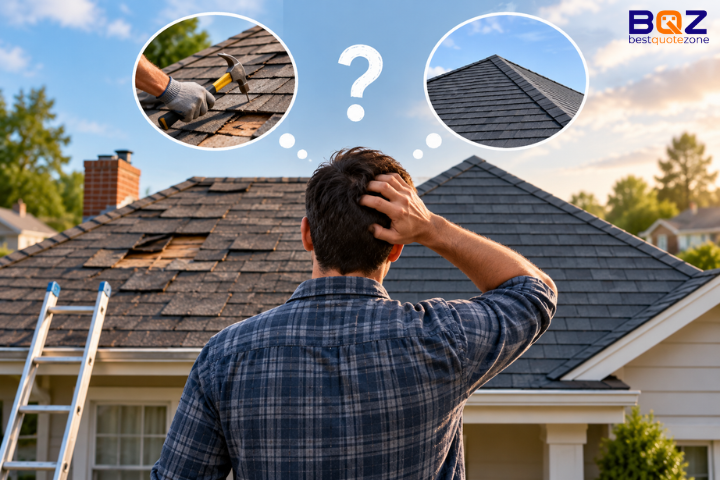
Replacing a roof is a significant investment, so choosing the right roofing material matters. Two of the most common options for American homeowners are metal roofing and asphalt shingles.
Both can protect your home for years, but they differ considerably in upfront cost, lifespan, maintenance, appearance, and long-term value. So, when comparing metal roof vs shingles, which option makes more sense?
Metal roofing generally costs more initially but can provide a longer service life. Asphalt shingles are typically less expensive, easier to install, and widely available. The better choice depends on your budget, local climate, roof design, and how long you plan to stay in your home.
Quick Overview
Choosing between a metal roof and asphalt shingles depends on your budget, home, climate, and long-term plans. Metal roofing typically costs more upfront but can offer a longer lifespan and greater durability. Asphalt shingles are generally more affordable and remain one of the most popular roofing options in the U.S. Both materials come in different styles, colors, and quality levels, which can affect the final price. Your roof size, design, labor costs, and existing roof condition will also influence the total project cost. Getting multiple quotes from qualified local roofing contractors can help you compare the options and choose the right roof for your home.
Metal Roof vs. Shingles: Cost Comparison
The biggest difference most homeowners notice is the initial price. Broad 2026 market estimates put asphalt roofing at approximately $1.50 to $4 per square foot, while metal roofing can range from roughly $4 to $30 per square foot, depending on the material and system.
|
Factor |
Metal Roof |
Asphalt Shingles |
|
Upfront cost |
Higher |
Lower |
|
Typical cost range |
$4–$30/sq. ft. |
$1.50–$4/sq. ft. |
|
Lifespan |
Often 40–60+ years |
Varies by product |
|
Maintenance |
Generally low |
Moderate |
|
Installation |
More specialized |
Widely available |
|
Style options |
Many |
Many |
|
Long-term replacement frequency |
Generally lower |
Generally higher |
|
Best suited for |
Long-term value |
Budget-conscious projects |
These are broad estimates rather than guaranteed prices. A roofing contractor will need to inspect your home before providing an accurate quote.
How Much Does a Metal Roof Cost in 2026?
The metal roof cost varies substantially depending on the material you choose. Common metal roofing options include steel, aluminum, zinc, copper, and standing-seam systems.
Approximate 2026 price ranges can include:
|
Metal Roofing Type |
Approximate Cost per Sq. Ft. |
|
Aluminum |
$4–$11 |
|
Steel |
$6–$16 |
|
Zinc |
$6–$12 |
|
Standing seam |
$7–$30 |
|
Copper |
$15–$30 |
A basic steel roof can be much more affordable than premium copper roofing.
Your final estimate may also include:
- Removal of the existing roof
- Disposal fees
- Underlayment
- Flashing
- Ventilation
- Fasteners
- Permits
- Labor
- Decking repairs
- Chimney or skylight work
Roof complexity can also increase the cost. A simple roof with few penetrations is usually easier to install than a roof with multiple valleys, dormers, skylights, and steep slopes.
How Much Do Asphalt Shingles Cost in 2026?
Asphalt shingles are usually the more affordable roofing option. Broad 2026 estimates place asphalt roofing at around $1.50 to $4 per square foot, although actual costs vary by product and location.
There are three common types:
3-Tab Shingles
These are generally the most economical asphalt shingles. They have a relatively flat appearance and are commonly selected for budget-conscious roofing projects.
Architectural Shingles
Architectural shingles have a more dimensional appearance and are widely used on residential homes. They typically cost more than basic 3-tab shingles.
Luxury Shingles
Luxury shingles are premium products designed to provide a more upscale appearance. Some are manufactured to resemble slate, wood, or other premium roofing materials.
Metal Roof Lifespan vs. Asphalt Shingles
Lifespan is one of the strongest arguments for metal roofing. A properly installed metal roof can potentially last 40 years or more, and some systems may reach 60 years or longer under suitable conditions.
The actual lifespan depends on:
- Roofing material
- Product quality
- Protective coating
- Installation quality
- Climate
- Maintenance
- Exposure to salt air
- Roof design
- Fasteners and sealants
Asphalt shingles generally have a shorter service life, but there is no single lifespan that applies to every shingle product. Higher-quality shingles installed correctly and maintained properly can last considerably longer than lower-cost products. The important point is that homeowners should compare the expected ownership cost, rather than focusing only on the initial installation price.
Which Roof Requires Less Maintenance?
Both roofing materials require some maintenance.
Metal Roof Maintenance
Metal roofing should be periodically inspected for:
- Loose fasteners
- Damaged flashing
- Failed sealants
- Corrosion
- Scratches or coating damage
- Debris
- Problems around vents and skylights
Metal roofing is generally considered low-maintenance, but it is not maintenance-free.
Asphalt Shingle Maintenance
Asphalt roofs should be checked for:
- Missing shingles
- Cracks
- Curling
- Granule loss
- Algae or moss
- Damaged flashing
- Leaks
- Damaged vents
Regular inspections can help identify small issues before they turn into expensive repairs.
Metal Roof vs. Shingles: Energy Efficiency
Metal roofing can offer energy-efficiency advantages depending on the roofing system. Reflective coatings and lighter colors can help reflect solar radiation, which may reduce heat absorption. However, roofing material is only one part of your home's energy performance.
Other important factors include:
- Attic insulation
- Ventilation
- Air sealing
- Roof color
- Roofing coating
- Local climate
- Overall building envelope
For this reason, homeowners should avoid assuming that a metal roof will automatically produce major energy savings.
If energy efficiency is important, ask the roofing contractor how the proposed roofing system will work with your existing insulation and ventilation.
Which Is Better for Severe Weather?
Both metal roofing and asphalt shingles can provide good weather protection when properly selected and installed.
Metal roofing can perform well in high-wind and severe-weather environments, but performance depends on the specific system, fastening method, installation, and local building requirements. Asphalt shingles also come in different wind and impact ratings.
Homeowners in areas affected by hurricanes, hail, tornadoes, heavy snow, or extreme heat should compare the specific roofing products rather than assuming one material is always better.
Metal Roofing ROI vs. Shingles ROI
The return on investment depends heavily on your circumstances. A metal roof can have a higher upfront price, but its longer service life may reduce the likelihood of another major roof replacement during your ownership. Asphalt shingles have the advantage of lower initial costs.
Asphalt shingles may be a better financial fit if:
- You have a limited renovation budget.
- You plan to sell the property within several years.
- You want a conventional roofing material.
- You want many contractors to choose from.
- Initial affordability is your main concern.
Metal roofing may be a better fit if:
- You plan to remain in your home for decades.
- You prioritize durability.
- You want a longer-lasting roofing system.
- You want to reduce future replacement frequency.
- You are comfortable with a higher upfront investment.
A simple way to think about long-term value is:
Lifetime roofing cost = Initial cost + maintenance + repairs + future replacements
This isn't a precise financial forecast, but it can help homeowners think beyond the initial contractor quote.
Pros and Cons of Metal Roofing
Pros
- Long potential service life
- Durable
- Low routine maintenance
- Many styles and colors
- Available in different metals
- Can work well with solar installations
- May reduce the frequency of roof replacement
Cons
- Higher initial cost
- Installation may require specialized experience
- Some systems can dent from severe hail
- Premium metals can be expensive
- Repairs may require specialized materials
Pros and Cons of Asphalt Shingles
Pros
- Lower upfront cost
- Widely available
- Easy to repair
- Many styles and colors
- Large contractor network
- Suitable for many U.S. homes
- Straightforward installation
Cons
- Generally shorter lifespan than metal
- More frequent replacement may be necessary
- Can be damaged by severe weather
- Granule loss occurs as shingles age
- Moss and algae can affect some roofs
What Factors Affect Your Roofing Quote?
National cost averages are useful for budgeting, but your actual quote can be very different.
1. Roof Size: Larger roofs require more materials and labor.
2. Roof Pitch: Steep roofs can increase labor and safety requirements.
3. Roof Complexity: Dormers, valleys, skylights, chimneys, and multiple roof sections can increase installation time.
4. Existing Roof Condition: Damaged decking or structural problems can add unexpected costs.
5. Material Selection: Steel, aluminum, copper, zinc, architectural shingles, and luxury shingles all have different prices.
6. Location: Labor rates, material availability, permits, weather conditions, and local regulations vary throughout the United States.
7. Contractor Experience: A low quote isn't necessarily the best value. Proper installation is critical to the performance and lifespan of any roofing system.
How to Save Money on Your Roof
You don't necessarily need to choose the cheapest material to control your total roofing cost.
Consider these strategies:
- Compare multiple contractor estimates.
- Request itemized quotes.
- Compare warranties carefully.
- Confirm that tear-off and disposal are included.
- Ask how decking repairs will be priced.
- Verify whether permits are included.
- Compare similar roofing products rather than different grades.
- Consider your expected ownership period.
Which Is Better: Metal Roof or Shingles?
There is no single answer for every homeowner.
Choose asphalt shingles if your priority is:
- Lower upfront cost
- Easy repairs
- Broad contractor availability
- Traditional residential appearance
Consider metal roofing if your priority is:
- Long service life
- Durability
- Lower replacement frequency
- Long-term ownership
- Premium roofing performance
The right decision should also consider your climate, neighborhood, roof design, resale plans, and available budget.
Final Verdict
The metal roof vs. shingles decision ultimately comes down to upfront cost versus long-term value.
Asphalt shingles are generally the more affordable option and remain a practical choice for many U.S. homeowners. Metal roofing costs more initially but can provide a significantly longer service life and may reduce the need for future roof replacements.
If you plan to stay in your home for decades, metal roofing may deserve the additional investment. If keeping your initial project cost low is more important, asphalt shingles may be the better fit.
Before choosing, compare detailed quotes from qualified local roofing contractors. Look at the complete scope of work, not just the final price.